10 Warning Signs to Check on Your Haines City Roof
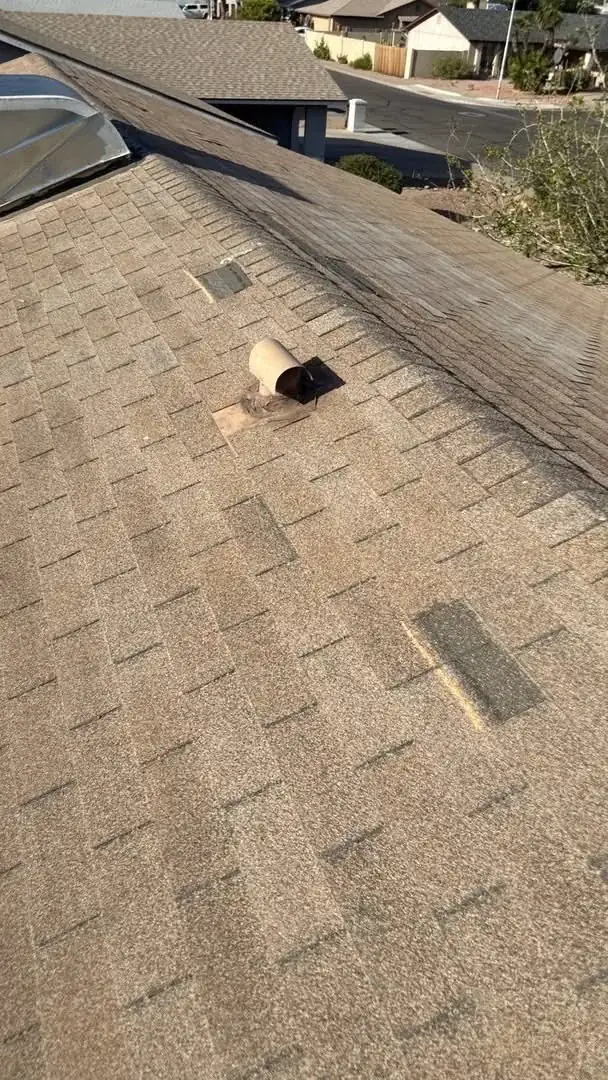
1. Granules in Your Gutters or at Downspout Outlets
Asphalt shingles shed granules as they age. Finding significant granule buildup in your gutters — especially after rain — signals the protective surface is breaking down. Once granules are gone, the asphalt beneath degrades rapidly under Florida's UV. How Florida's UV accelerates granule loss →
2. Curling or Cupping Shingles
Shingles that curl upward at the edges (cupping) or downward at the center (clawing) have lost their flexibility from heat cycling. In Haines City's climate, curled shingles in any quantity are a serious warning sign — they lift in wind events and allow water to penetrate.
3. Dark Streaks or Black Staining
Dark streaking on shingles is algae — Gloeocapsa magma — feeding on limestone filler in asphalt shingles. It thrives in Haines City's humidity. Streaking is not just cosmetic; it traps moisture against the shingle surface and shortens lifespan. Algae-resistant shingles prevent this on new installations.
4. Daylight Visible in the Attic
Go into your attic on a bright day with the lights off. If you can see daylight through the decking or around rafters, you have gaps that allow water and pests to enter. This is an urgent sign requiring immediate attention.
5. Your Roof is 15+ Years Old
In Haines City's climate, architectural shingles realistically last 15–20 years — not the 30 years manufacturers advertise. A 15-year-old shingle roof is in its final phase of reliable service life. Full Florida roof lifespan data →
6. Your Insurance Carrier Sent a Roof Notice
Once a roof hits 15 years, Florida insurers can request an inspection. Getting a notice doesn't automatically mean you need a replacement — but it does mean you need a professional assessment. What to do when your insurance carrier flags your roof →
7. Missing Shingles After a Storm
Missing shingles after a thunderstorm or tropical weather are obvious — but the damage extends beyond the visible gap. Surrounding shingles have also been stressed and their sealant strips compromised. Inspect the full roof after any wind event, not just the spots where shingles are visibly gone. Storm damage roof inspection in Haines City →
8. Damaged or Lifted Flashing
Flashing around chimneys, skylights, pipes, and wall intersections is where roofs most commonly leak. Lifted, cracked, or corroded flashing in Haines City's salt-laden air and humidity is a leading cause of interior water damage — and often repairable without full roof replacement.
9. Sagging Roof Deck
A sagging area anywhere on your roof indicates structural damage — likely rotted decking or damaged trusses beneath. This is beyond cosmetic and requires immediate professional assessment. Sagging means water has already been getting in for some time.
10. Interior Water Stains on Ceilings
Brown or yellow staining on interior ceilings directly below roofline areas means water has already breached the roof system. By the time staining appears, water has been present long enough to saturate insulation, potentially begin mold growth, and damage ceiling material. Act immediately.
What to Do After Identifying Warning Signs
Not all warning signs mean full replacement. A professional inspection determines whether you need targeted repair or complete installation. Deciding between full installation and targeted repair →
If storm damage triggered the signs: Storm damage inspection and documentation →
If insurance is involved: What your Florida policy covers →
Humidity-related warning signs specific to Haines City: Humidity-related signs to look for in Central Florida homes →